The original Area 51
Before it was a website, it was a room with a door and a sign over it. This page is the record of that room.
The original Area 51 was a real arcade in Quincy, Illinois, run by Christian Sass and John Mast in the 1990s. Iris Group Web Development ran out of the back office. The sign on the door was a heavy, blocky, technical font. AREA on top, 51 below, printed on vinyl by a sign shop that knew exactly what an arcade was supposed to look like.
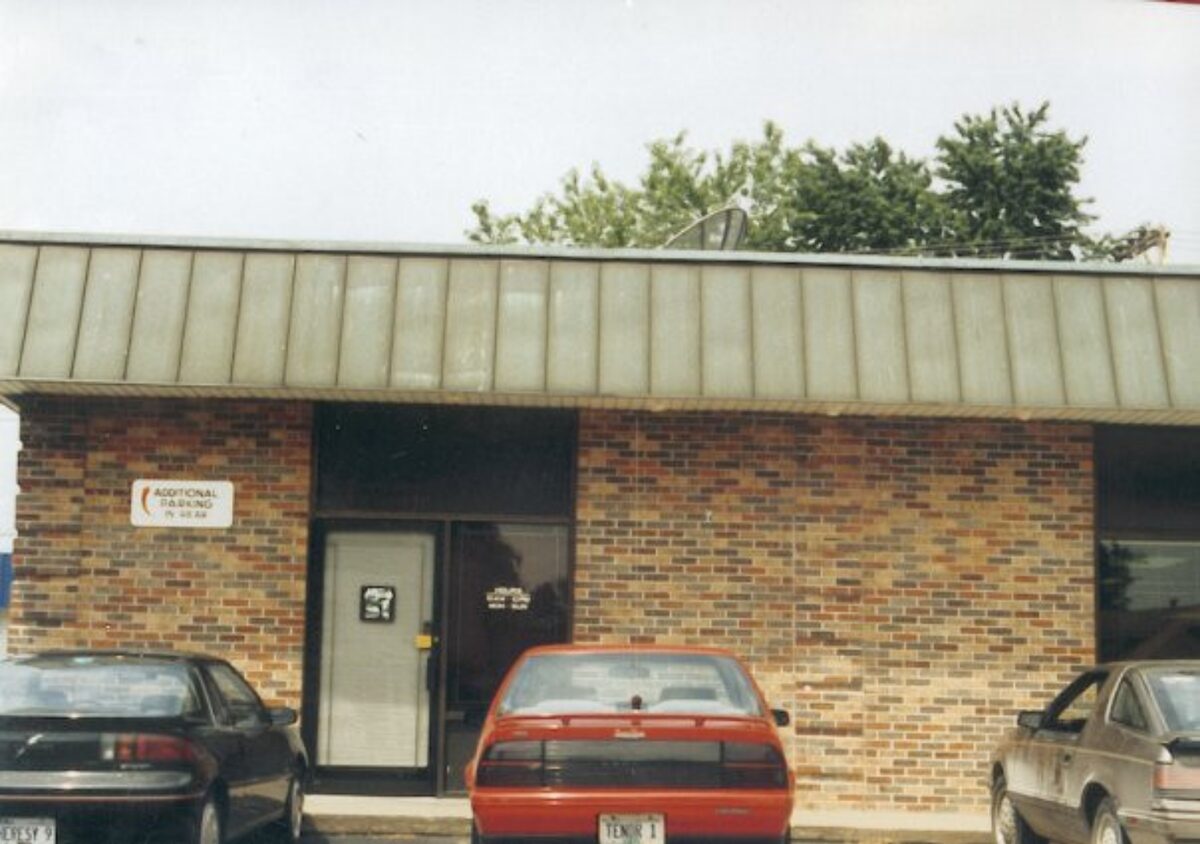
The building
A single-story brick commercial building. Brown and tan brick, a wide overhanging metal cornice roof, a recessed entrance with a glass storefront. A small white sign on the brick: ADDITIONAL PARKING IN REAR. Small-town commercial block energy, the kind of place you drove past a hundred times without knowing what was inside.
The floor
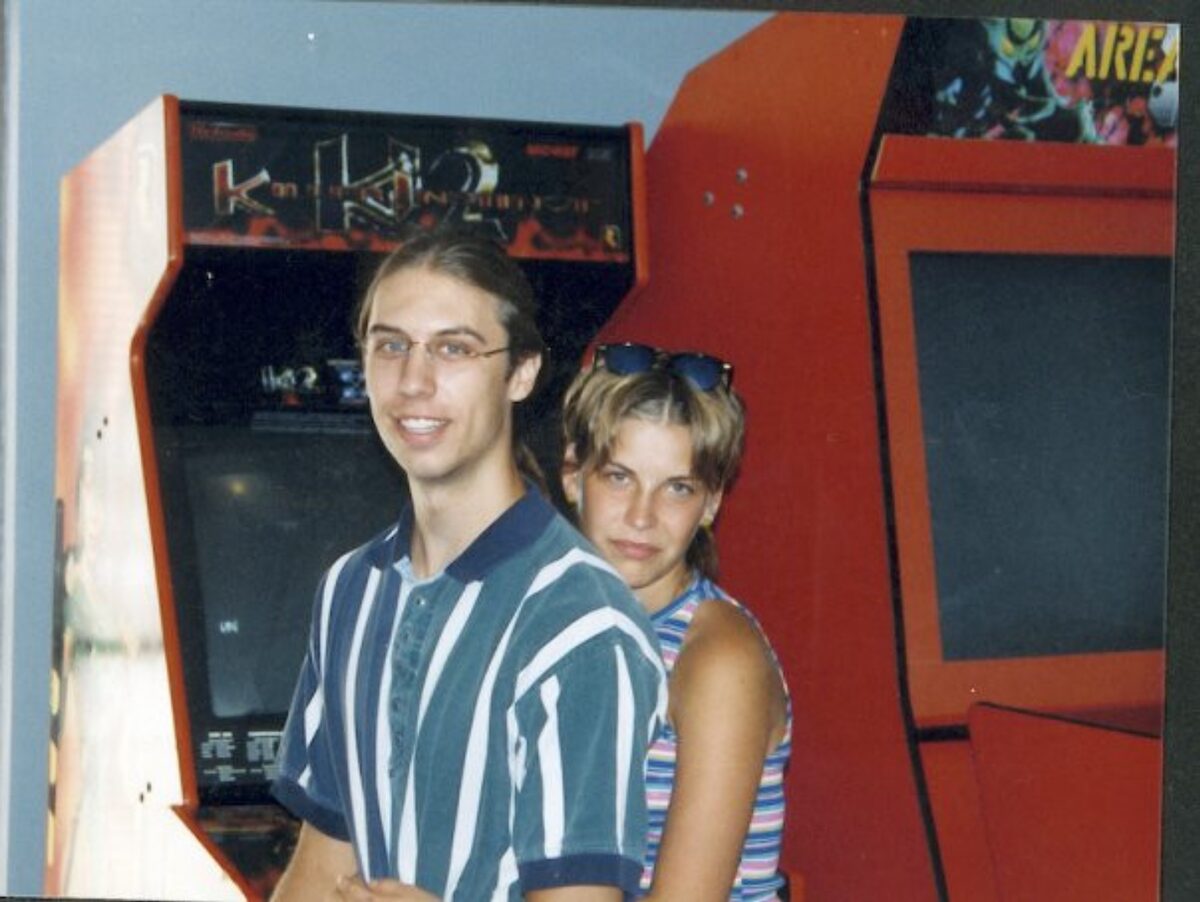
Two large orange arcade cabinets, side by side against the wall. Not a row of them. Two. Which meant that if you wanted to play, you played next to somebody, and if you wanted to play well, you played against them.
That is where the idea behind this arcade actually comes from. Retro cabinets were never built for one person in a room by themselves. They were built for two people standing shoulder to shoulder, sharing a screen. Everything you can do on this site today, playing something with someone who is not in the room with you, is an attempt to put that back.
The sign
The sign was brushed chrome metal with a bevel, made to look cooler than it was with Photoshop filters, because actually fabricating it in real metal was the plan and the budget never quite agreed. The green neon glow lived behind it, not on it. The chrome was the sign. The neon was the light coming from behind the sign.
That distinction is the entire visual language of this site. If you look at the chrome letters at the top of this page, the green is not painted on them. It is bleeding out from behind them, through the gaps and around the edges, the way light behaves when a solid object is standing in front of it. That is not a design trend. That is the actual sign, thirty years later, with better tools.
There is one more thing about the sign worth writing down, because it was the moment the design landed. When the lens flare was added behind the chrome, the reaction in the room was immediate and it was laughter: “God, that's hilarious. Oh, that's it. That's it.”
The internet, at the time
Here is what watching video on the internet meant in the late nineties, which is to say here is what was happening in the back office while the cabinets ran out front.
There was exactly one way to do it, it was called RealPlayer, and it played at roughly one inch by one inch. You could count the pixels. You could not make out the characters' faces. And if you tried to blow it up, it fell apart, and it ruined it. The postage stamp was not a limitation you tolerated. It was the format. Small was the only way it worked at all.
1 in × 1 in
this is how big it was
First episodes of anything, streamed at postage-stamp size, gathered around a monitor in the back office of an arcade in Quincy, Illinois. If you were not there, understand that this was astonishing. If you were there, you already know why it is on this page.
We're not building a website that plays games. We're building the place the games live in. Christian Sass · Binary Ranch
What came back
The neon is new. The font is old. The name is the same. John Mast still has the original sign in his garage, and when the photos of it come out of that garage, the wordmark on this site gets sharper, because it will finally be traced from the real object instead of from a decal and a memory.
Everything above is the reason the room on the other side of the next button exists. The cabinets are digital now and the arcade is open at any hour, to anyone, anywhere. But the thing being rebuilt is not the games. It is the standing next to somebody.